Most investors know how to evaluate a Software-as-a-Service (SaaS) company using standard metrics like CAC (Customer Acquisition Cost), retention, and MRR (Monthly Recurring Revenue). However, these metrics are completely useless when it comes to deep tech.
Deep tech companies often spend years in R&D before making a single dollar. So, how do you separate the ones that will make money from the ones that won’t, before they even start generating revenue?
For a SaaS company, the main question is, "Will anyone pay for this?" But for deep tech, the very first question to ask is: "Will this even work?"
1. Verifying the Technical Breakthrough
To evaluate whether a technology is viable, you need to look for concrete evidence of a genuine technical breakthrough. Here are three key indicators to look for:
- Peer-Reviewed Research: This verifies that the underlying technology is scientifically possible, at least on a small scale.
- Patents: A strong patent portfolio signals that the company has made meaningful progress toward its goals. It also serves as an excellent evaluation signal for deep tech companies that are still operating in stealth mode.
- Proprietary Data: Materially unique data sets create a compounding, long-term competitive advantage against other companies.
While researching and understanding these technical layers can be challenging, it is the most critical first step for any deep tech investor.
2. Evaluating the Founder
The next factor can be evaluated even if you do not have deep domain expertise: the founder.
Look for founders who possess previous domain experience and a proven track record of building things. One of the most important goals when meeting a deep tech founder is ensuring they truly understand what they are making.
The Theranos Warning Sign: During its development, Theranos was notoriously inconsistent about what its technology actually was. They started by claiming it was a robotic arm in a box, before later switching their story to microfluidics.
Investor Strategy: Take 20 minutes before a meeting to research and write thoughtful questions about how the technology works. Watch closely as the founder answers to see if they genuinely know what they are doing.
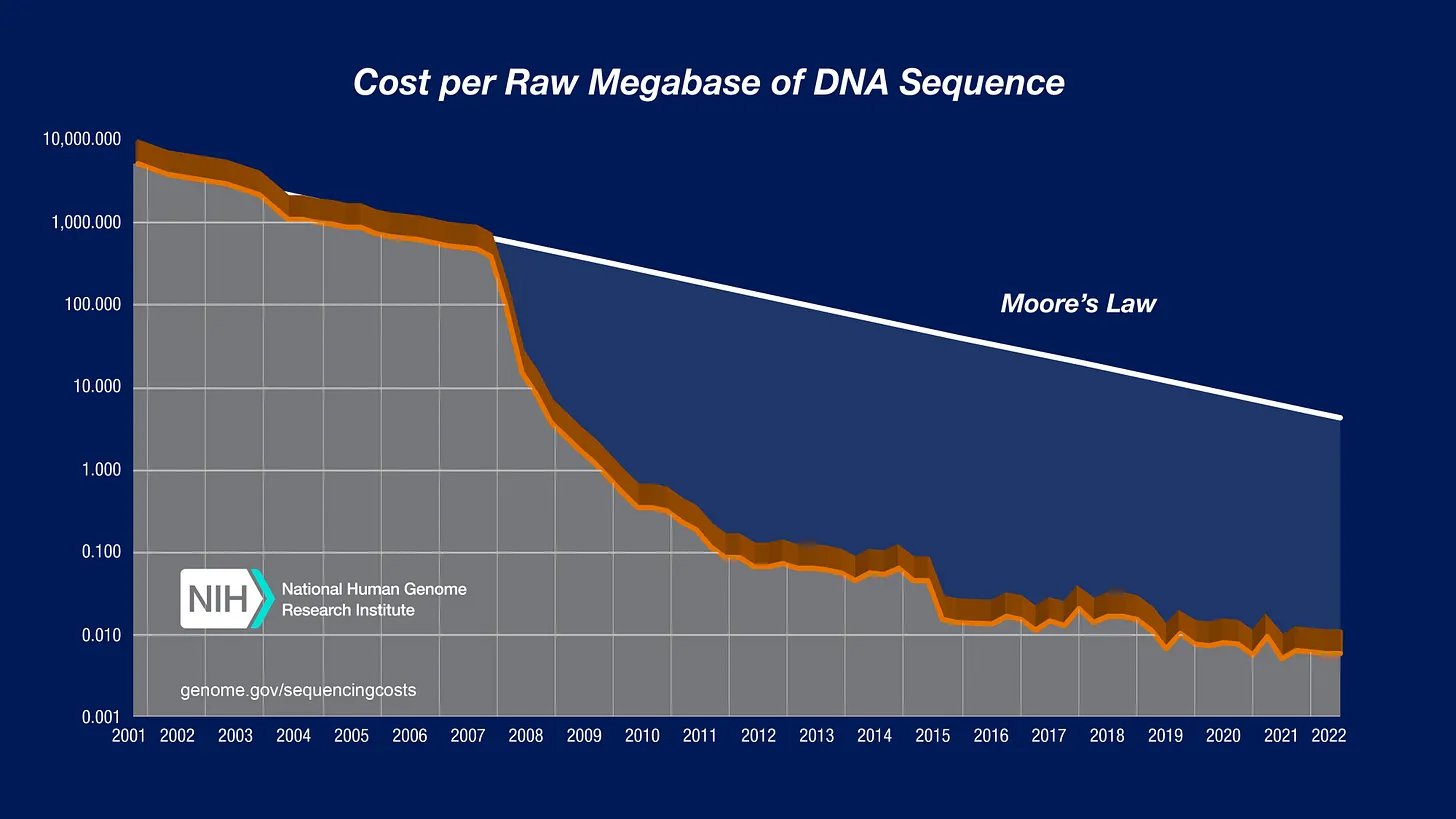
3. Timing and the Cost Curve
Once you have verified that the product is possible, you must determine if it is the right time to build it.
Technological booms generally occur when fundamental costs collapse:
- AI exploded because the cost of GPUs went down.
- Space startups benefited significantly from rapidly decreasing launch costs.
- Biotech startups continue to benefit from lowering sequencing and synthesis costs.
You want to invest right as the macro cost curve starts to make the technology economically viable. Make sure that the category the company operates in is growing and has a strong trajectory toward becoming significantly cheaper over time. This ensures the company is being founded at the exact right time.
4. Market Demand & Milestone Hedging
The final piece of the framework is determining market demand: Will anyone actually buy it? For instance, Nuclear Fusion targets a massive, undeniable global energy market. Always make sure that the final product addresses a real, high-volume demand.
The Bonus: Alternative Revenue Milestones
A major bonus for a deep tech company is if its entire future does not rest solely on one massive, final technical breakthrough.
- The SpaceX Example: Years ago, SpaceX promised Mars colonization in the near future. While they are not close to achieving that specific goal today, they successfully achieved the intermediate milestones of collapsing launch costs and launching Starlink. This intermediate revenue engine is exactly why their early investors saw massive returns.
Filter Real Breakthroughs with StartupWiki
If you want to apply this evaluation framework to real-world companies, we built a database of startups structured entirely around these same filters.
Explore data-driven deep tech opportunities directly at StartupWiki — the Biotech & Life Sciences, Quantum Computing, and Aerospace & Defense categories are full of companies that fit this framework.
If you're on the other side of the table and building deep tech yourself, the StartupWiki launch board is one of the fastest ways to get in front of investors, early adopters, and the technical community. A launch stays live for a week, and the do-follow backlink keeps working long after that. Submit your launch and you're live.
— The StartupWiki Team